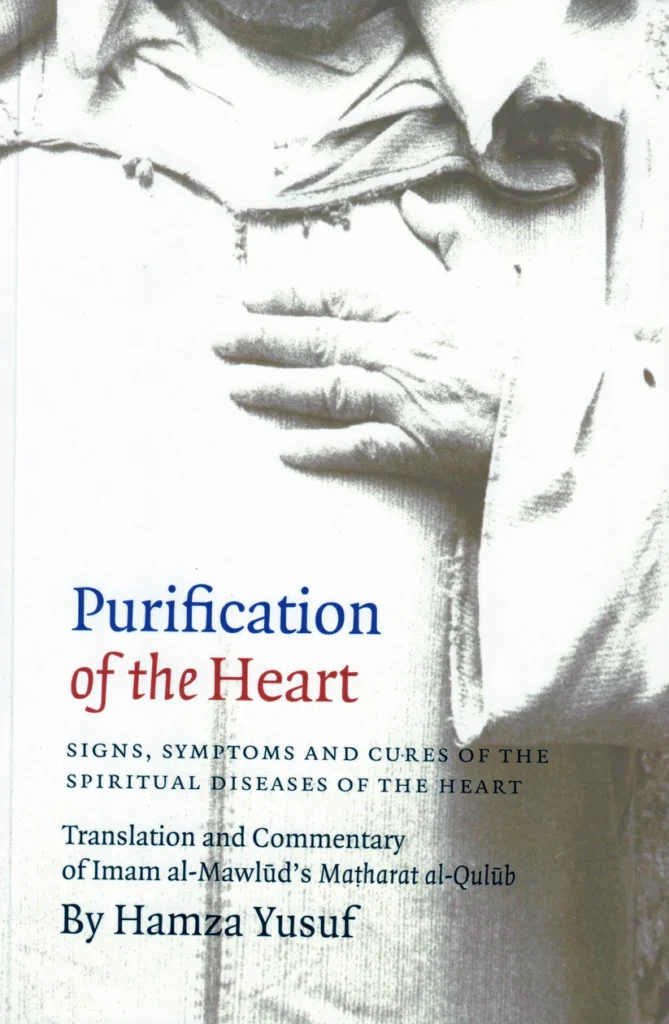
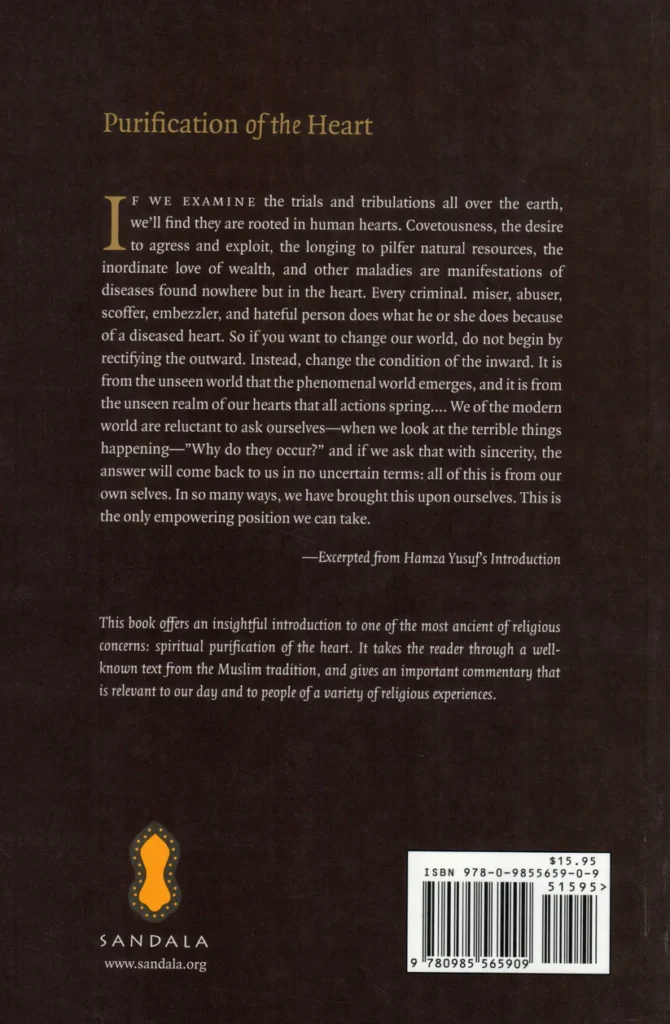
In a world consumed by external distractions, the most profound battles are often fought within. This transformative work by Shaykh Muhammad Mawlud, masterfully translated by renowned scholar Hamza Yusuf, offers a timeless roadmap to spiritual wellness and inner peace.
Drawing from the classical Islamic poem “Matharat al-Qulub,” this profound guide diagnoses the ailments that plague the human heart—miserliness, envy, vanity, hatred, and ostentation—and provides practical, compassionate cures rooted in Islamic wisdom. Shaykh Mawlud, a master of both outward and inward Islamic sciences, approaches each spiritual disease with the precision of a skilled physician, revealing not just symptoms but root causes and lasting remedies.
What makes this book revolutionary is its recognition that spiritual purification isn’t a one-time achievement but a lifelong journey requiring constant vigilance and sincere effort. It challenges readers to develop an active, engaged relationship with their hearts, offering tools that transform self-awareness into genuine spiritual growth.
Whether you’re seeking to overcome personal struggles, deepen your faith, or simply understand the complexities of the human soul, this illuminating text bridges ancient wisdom with contemporary relevance. It speaks not just to Muslims, but to anyone yearning for authenticity, inner clarity, and a heart unburdened by the weight of spiritual disease.
Discover the path to a purified heart—where true peace begins.
What Islamic Scholars and Reviewers Say About “Purification of the Heart”
Recognition of the Translator: Hamza Yusuf has been described by The Guardian as “arguably the west’s most influential Islamic scholar” and The New Yorker reported he is “perhaps the most influential Islamic scholar in the Western world.” He was also ranked as “the Western world’s most influential Islamic scholar” by The 500 Most Influential Muslims publication.
Scholarly Endorsements: The book deals with the Islamic science of tasawwuf, which scholars note is more meaningfully interpreted as ‘purification’ rather than simply sufism. Great Islamic scholar Sidi Ahmad Zarruq defined Sufism as “sincerity in turning to Allah,” which aligns with the book’s core message.
Academic and Practical Value: Reviewers note the book is well presented, easy to read, and sufficiently accessible in its language, making it beneficial even for non-Muslims. One detailed review described it as “easy to follow, well-structured and profound in its advice,” with Hamza Yusuf adding insightful commentary that relates to modern experiences.
Integration of Classical Scholarship: The book draws upon the teachings of major scholars like Imam al-Ghazali, an 11th-century master of the science of purification. Each chapter contains relevant references from the Qur’an and Hadith that provide practical solutions to spiritual tribulations.
Practical Approach: Reviewers emphasize that the book requires deep reflection and recommend focusing on one or two chapters at a time to encourage applying changes to one’s life, noting that purification is a lifelong process, not a destination.
The book has been widely adopted in Islamic studies programs and is considered a foundational text for understanding spiritual purification in the Islamic tradition.
Insights About the Poem “Matharat al-Qulub”
Origin and Purpose
The poem literally translates to “Purification of the Hearts” and is described as a treatise on the “alchemy of the hearts”—essentially a manual on how to transform the heart. Shaykh Muhammad Mawlud wrote this poem because he observed the prevalence of diseased hearts in his time, noting that students of religion were spending their time learning abstract sciences that people were not really in need of, while neglecting the sciences that pertain to what people are accountable for in the next life—namely, the spiritual condition of the heart.
The Author’s Background
Muhammad Mawlud was born in Mauritania around 1260 Hijra/1844 CE into a family of scholars descended from Ja’far ibn Abi Talib, the cousin of Prophet Muhammad. He authored a total of 70 works including books, poems and commentaries, specifically focusing on spirituality and the Arabic language, before passing away in 1323 H/1905 CE.
Literary Form and Structure
The poem begins with the verses: “I begin by starting with the heart of beginnings, for it is the highest and noblest of beginnings. Have courtesy with God, the High and the Majestic, by practicing modesty and humility—”
Imam Mawlud begins with a play on words in Arabic where “bad’u” (beginning) is reversed to create “adab” (courtesy), establishing courtesy as the portal to the purification of the heart.
Mauritanian Scholarly Tradition
Despite Mauritania being a desert country with harsh environmental conditions, the Mauritanians established a sophisticated system of preserving the sacred sciences of Islam through specific clans called zawāya that made scholarship their primary focus and passed knowledge to each successive generation through traditional Islamic universities known as maḥḍaras.
The Poem’s Unique Approach
This work is distinctive because the main text is poetry, which reflects how poetry remains a massive part of certain Eastern cultures, though somewhat lost and forgotten in the West. The poem was written in the 19th century and recently received its first-ever complete English translation by a formerly incarcerated student who spent years producing an English commentary while studying the faith.
The poem represents a masterful integration of Islamic spirituality, psychology, and practical guidance, all conveyed through the powerful medium of classical Arabic poetry.
Insights About the Poem “Matharat al-Qulub”
Here are the key insights about this classical Islamic poem:
Origin and Purpose
The poem literally translates to “Purification of the Hearts” and is described as a treatise on the “alchemy of the hearts”—essentially a manual on how to transform the heart. Shaykh Muhammad Mawlud wrote this poem because he observed the prevalence of diseased hearts in his time, noting that students of religion were spending their time learning abstract sciences that people were not really in need of, while neglecting the sciences that pertain to what people are accountable for in the next life—namely, the spiritual condition of the heart.
The Author’s Background
Muhammad Mawlud was born in Mauritania around 1260 Hijra/1844 CE into a family of scholars descended from Ja’far ibn Abi Talib, the cousin of Prophet Muhammad. He authored a total of 70 works including books, poems and commentaries, specifically focusing on spirituality and the Arabic language, before passing away in 1323 H/1905 CE.
Literary Form and Structure
The poem begins with the verses: “I begin by starting with the heart of beginnings, for it is the highest and noblest of beginnings. Have courtesy with God, the High and the Majestic, by practicing modesty and humility—”
Imam Mawlud begins with a play on words in Arabic where “bad’u” (beginning) is reversed to create “adab” (courtesy), establishing courtesy as the portal to the purification of the heart.
Mauritanian Scholarly Tradition
Despite Mauritania being a desert country with harsh environmental conditions, the Mauritanians established a sophisticated system of preserving the sacred sciences of Islam through specific clans called zawāya that made scholarship their primary focus and passed knowledge to each successive generation through traditional Islamic universities known as maḥḍaras.
The Poem’s Unique Approach
This work is distinctive because the main text is poetry, which reflects how poetry remains a massive part of certain Eastern cultures, though somewhat lost and forgotten in the West. The poem was written in the 19th century and recently received its first-ever complete English translation by a formerly incarcerated student who spent years producing an English commentary while studying the faith.
Making Ancient Wisdom Accessible
“Purification of the Heart” serves as the bridge between this profound 19th-century Mauritanian poem and contemporary readers worldwide. Through Hamza Yusuf’s masterful translation and insightful commentary, the timeless wisdom contained in “Matharat al-Qulub” is unlocked for modern audiences who may not have access to classical Arabic poetry or traditional Islamic scholarship. The book preserves the poem’s systematic approach to diagnosing and curing spiritual diseases while making its teachings practical and applicable to today’s challenges. What Imam Mawlud composed in elegant Arabic verse over a century ago to address the spiritual neglect he witnessed in his time, this book now delivers with clarity and relevance to hearts seeking healing in our own era. It transforms a classical text into a living guide, proving that the diseases of the heart—and their cures—are truly timeless.
Transparency is important to us. Hayatan Tayyiba participates in affiliate programs with MeccaBooks and other Islamic book retailers. When you click on our book links and make a purchase, we may receive a small commission at no extra cost to you.
These commissions help support our mission of sharing authentic Islamic knowledge and maintaining this website. However, our recommendations are based solely on the quality and value of the books themselves. We only feature books that align with authentic Islamic teachings and that we believe will genuinely benefit your spiritual growth.
Your support means the world to us. Jazakum Allahu khairan (may Allah reward you with goodness).