Introduction
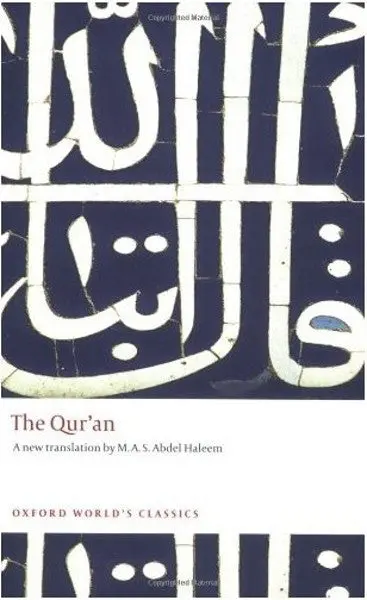
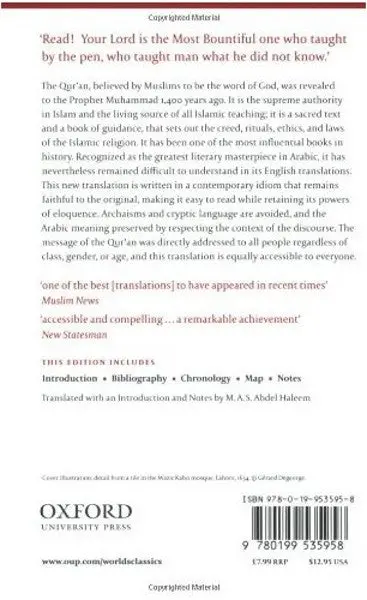
The Qur’an: A New Translation by M.A.S. Abdel Haleem is widely celebrated as a transformative work that bridges the gap between the eloquence of the original Arabic text and the accessibility sought by English-speaking readers. Recognized as one of the most influential literary works in history, the Qur’an serves as the ultimate authority in Islam, outlining its creed, rituals, ethics, and laws. For years, the English-speaking audience lacked a translation that captured both the clarity and the literary brilliance of the Qur’an. Abdel Haleem’s translation meets this need, presenting the sacred text with remarkable faithfulness and readability. This article explores the features, historical context, and reception of this acclaimed work.
Themes and Purpose of The Qur’an: A New Translation by M.A.S. Abdel Haleem
Haleem’s translation aims to make the Qur’an’s teachings comprehensible to contemporary English-speaking readers while maintaining the linguistic and spiritual essence of the Arabic text. His work focuses on bridging cultural and linguistic divides, presenting Islam’s sacred text in a way that resonates with modern audiences. The translation addresses critical themes such as tolerance, social justice, and spiritual introspection, aiming to dispel common misconceptions about Islam and highlight its universal values.
Moreover, Haleem’s notes provide invaluable context, explaining geographical, historical, and personal references. This feature enhances the reader’s understanding, particularly for those unfamiliar with Islamic history and culture.
Unique Features of The Qur’an: A New Translation by M.A.S. Abdel Haleem
Several aspects make The Qur’an: A New Translation stand out:
- Contemporary Language: The translation is crafted in modern English, avoiding the archaisms and convoluted structures found in many earlier translations. This approach ensures clarity and readability without compromising the text’s depth.
- Faithful Representation: Despite its contemporary language, the translation remains deeply faithful to the original Arabic, preserving its profound meanings and literary beauty.
- Comprehensive Notes: Haleem includes detailed notes to elucidate complex references and provide additional context. These annotations are particularly useful for readers exploring the Qur’an for the first time.
- Topic Index: The inclusion of an index that organizes Qur’anic material by themes offers a practical tool for scholars and casual readers alike.
- Insightful Introduction: The introductory section explores the Qur’an’s structure, style, and historical compilation, addressing contemporary issues such as interpretations related to militancy, tolerance, and gender roles.
Translator’s Background and Approach
M.A.S. Abdel Haleem, born in Egypt, memorized the Qur’an as a child and later pursued higher education at Al-Azhar University, Cairo, and Cambridge University. With decades of experience teaching Arabic and Islamic Studies at Cambridge and the School of Oriental and African Studies (SOAS) in London, Haleem brings unparalleled expertise to his translation.
His approach is rooted in a profound understanding of both classical Arabic and modern linguistic theory. Haleem’s intent is to render the Qur’an accessible to English speakers without diluting its theological and literary essence. His scholarly rigor and deep respect for the text are evident throughout the translation.
Impact and Reception by Religious Scholars
The Qur’an: A New Translation has been widely praised for its clarity and accessibility. Many scholars commend its ability to convey the Qur’an’s meanings without resorting to obscure or overly literal translations. The notes and introduction have been particularly well-received for addressing contemporary issues and providing context often overlooked in other translations.
However, some critics argue that no translation can fully capture the depth and nuances of the original Arabic. While this limitation is inherent to all translations, Haleem’s work is acknowledged as a significant achievement in bringing the Qur’an closer to English-speaking audiences.
Analyzing Reviews for The Qur’an: The New Translation by M.A.S. Abdel Haleem
The Qur’an translation titled The Qur’an: A New Translation by M.A.S. Abdel Haleem has received varied feedback that highlights its strengths and areas for improvement. Below is an analysis of the reviews, focusing on key themes, common praise, critiques, target audience, and overall reception.
1. Common Praise
Clarity and Readability: One of the most prominent positive themes in the reviews is the translation’s clarity and accessibility. Readers appreciate that it uses modern, simple language that makes the text easier to understand. This quality is particularly praised for reaching a broader audience, including young readers and those who may not have an advanced grasp of complex religious or literary language.
Footnotes and Commentary: Reviewers value the additional footnotes that provide context and explanation for certain verses. This feature is seen as crucial for readers who may not be familiar with the cultural or historical background necessary for fully understanding the text. The footnotes are lauded for clarifying many misconceptions and helping readers grasp the intended meanings more deeply.
Welcoming and Approachable Tone: The translation has been commended for its welcoming tone, which helps readers approach the text without feeling overwhelmed or judged. This aspect is especially notable for readers coming from non-Muslim backgrounds or those exploring Islam for the first time.
Literary and Linguistic Integrity: While acknowledging that some of the linguistic beauty of the original Arabic is inevitably lost in translation, readers still find that the translation retains the power and eloquence of the Qur’an. The avoidance of archaic language allows for a more fluid and relatable experience while maintaining respect for the original meaning.
2. Common Critiques
Repetitiveness: A notable criticism is the repetitive nature of the text, which some reviewers found tedious. This issue was compared to reading genealogies in other religious texts, suggesting that while the repetition serves a purpose, it may not engage all readers equally.
Depth and Contextual Understanding: Some readers pointed out that while the footnotes are helpful, a more comprehensive introduction or a historical and biographical context would be beneficial for readers to truly understand the verses. This critique highlights that a standalone translation may not offer enough depth without additional resources.
Simplification Concerns: There are occasional mentions of concern over the simplicity of the language, which some reviewers felt could potentially lead to misinterpretation or oversimplification. While the approach makes the translation accessible, it may not satisfy those seeking a more nuanced and scholarly rendering of the text.
3. Who This Translation Is For
Non-Muslims and New Muslims: The translation’s accessible language and detailed footnotes make it ideal for non-Muslims interested in learning about Islam or gaining insight into the Qur’an without the barrier of complex language. New Muslims who are still in the early stages of understanding their faith also find this version helpful as it simplifies many challenging concepts.
Young Readers and Educators: The relatively simple reading level (around a 6th-grade reading level) makes it suitable for younger readers or those looking for an introduction to the Qur’an. Teachers and educators may also find it a valuable resource for introducing students to the text in a way that is not intimidating.
General Readers Seeking Clarity: For anyone looking for a translation that avoids overly poetic or archaic language, this version strikes a balance by being straightforward while retaining essential elements of the original meaning.
4. Overall Reception
The translation by M.A.S. Abdel Haleem is widely appreciated for its clear and modern approach, making the Qur’an accessible to a diverse audience. Readers often praise its readability, footnotes, and the overall effort to preserve the original essence of the Qur’an while making it understandable for English-speaking audiences. This translation has been particularly influential for those who are new to the Qur’an or who have struggled with more complex translations in the past.
However, it is not without its critiques. The repetition within the text and the desire for more historical and contextual background suggest that while it serves as an excellent introductory translation, it may not fully satisfy those seeking in-depth scholarly analysis or a more intricate linguistic approach.
Conclusion
M.A.S. Abdel Haleem’s The Qur’an: A New Translation is a landmark work that offers a clear and faithful rendition of Islam’s sacred text. Its modern language, insightful notes, and thoughtful presentation make it an invaluable resource for anyone seeking to understand the Qur’an—be they Muslims, non-Muslims, scholars, or casual readers but readers with advanced needs may need additional resources to supplement their understanding.
This translation not only bridges linguistic gaps but also fosters greater appreciation for the Quran’s profound messages and universal values. Explore this remarkable work to deepen your understanding of the Qur’an in a contemporary context.
Explore More Quran Translations
If you found this review insightful and want to discover more about other translations of the Qur’an, be sure to check out the other articles We’ve published. Each article highlights a different translation, offering unique perspectives and insights into its distinct features. Whether you’re new to reading the Qur’an or seeking a version that aligns with your reading preferences, our collection of articles can help guide you in finding the translation that best suits your needs.
Dive into these resources to deepen your understanding and find the translation that resonates with you.